Friday, 11 March 2022

Google Earth Engine: A powerful application for the Earth Scientists

Hello Readers!

Have you ever faced the difficulty of downloading a vast amount of satellite data due to slow internet? ever troubled by the limited processing capabilities of your computer system? lack of storage to handle the data? fear not! because now there exists a solution to all these problems-Google Earth Engine is the answer to all your satellite image processing requirements.  

Google Earth Engine is a cloud computing platform to process various kinds of spatial data, especially remote sensing satellite data. One can now access thousands of satellite imagery with just a few lines of code something unimaginable in the last decade is now possible. Thanks to GEE. 

GEE is the go-to tool for anybody seeking to use remote sensing data because of its powerful cloud data processing and its free access and availability of a vast number of datasets. Moreover, there is excellent documentation for one seeking to learn how to use it. With just the basic knowledge of Javascript syntax, one can get started on the platform using javascript API on the google earth engine code editor. There are also several user forums on social media and open access courses where one can find relevant information and help. 

This might seem a bit overwhelming for a newcomer without the knowledge of coding however let me assure you that with each line of successfully executed code your confidence skyrockets. This has been the case with me (a non-programmer). When you realise the potential that this platform holds you will automatically get the motivation to learn.  So if you are somebody who has a desire to find solutions to real-world problems using satellite data on GEE then Introduction to JavaScript for Earth Engine is the place to start with or any basic course in javascript. Once you have a basic knowledge of javascript head over to the GEE documentation to learn how to use this platform. for those who already have a programming background, you can try completing the exercises from this free course material End-to-End Google Earth Engine (Full Course Material). 

Happy learning.

Thank you. 

Tuesday, 11 May 2021

"Virtual Tools for Learning Geology"

In geology, we have to deal with several aspects of the earth, varying from identifying minerals under a petrological microscope to rock structures such as faults and folds, besides recognising topographic features like mountains and valleys; and on most occasions imagining them in 3-dimensions. This poses a challenge, both for the students as well as the teachers. The ongoing pandemic has further made matters worse due to limited physical interaction between students and teachers in the classroom. This has compelled us to hunt for innovative teaching tools. Here below is a list of a few virtual tools which we have found useful for teaching geological concepts in online teaching mode.

Visible Geology 


Visible Geology allows you to create geologic block diagrams in three dimensions in your browser. You can add geologic beds, folds, dikes, faults, and titling events and then explore your geology on different topographies. You can create cross-sections and boreholes in seconds, and explore data on an interactive stereonet! 

Visible geology is one of the tools that students love to interact with. It was used to cover topics in structural geology such as the concept of strike and dip of strata, geologic maps, inferring geological history from geologic block models, the study of effects of topography on outcrop patterns. Go ahead and build your own geologic models with this tool. 

Virtual Microscope 


The Virtual Microscope (VM) for Earth Sciences is primarily an Open Educational Resource (OER). The VM project aims to make a step-change in the teaching of Earth Sciences by broadening access to rock collections that are currently held in museums, universities and other institutions around the world. The Virtual Microscope allows users to examine and explore minerals and microscopic features of rocks, helping them to develop classification and identification skills without the need for high-cost microscopes and thin section preparation facilities. 

Virtual Microscope has been a lifesaver as far as optical mineralogy is concerned. The potential of this platform as a very effective teaching tool for the identification of minerals and rocks in thin section is immense. As faculty, we need to frame the right questions that will challenge our students to get the correct answers. This platform offers a wide range of virtual rocks specimen on an interactive platform that is as good as working on a real microscope but of course without the risk of mishandling the equipment. Go ahead and explore a variety of rocks specimens and thin sections on the platform. 

Google Earth pro 


Google Earth allows us, to explore the whole world from above with satellite imagery and 3D terrain of the entire globe and 3D buildings in hundreds of cities around the world and to see cities and landscapes from various angles. 

The power of google earth as an easy to use detailed virtual globe with high-quality data cannot be overemphasized this combined with its added functionality such as interactive dynamic KML files, image overlay, basic GIS functionality, Timeline imagery, measure tool and 3D view makes it especially useful for covering various topics in geology. We have used google earth to cover concepts in Earth dynamics (e.g. Plate tectonics), natural hazards (e.g. distribution of earthquakes, volcanoes, landslides etc.), Marine geology (Ocean profiles, Bathymetryetc.), Remote sensing(e.g. Visual image interpretation). Good earth offers endless possibilities for teaching geosciences. So go ahead and try.  


Thank you for reading and please feel free to share how technology has helped advance your understanding of geology? in the comments below 

Sunday, 22 March 2020

Satellites!! Our Eyes in the Sky

Hello Readers,

Its been quite sometime since I started playing with satellites imagery. The world of Satellite Remote Sensing is very fascinating and I confess that I am hooked so much so that I have already penned downs about a dozen case studies to pursue in the coming months.

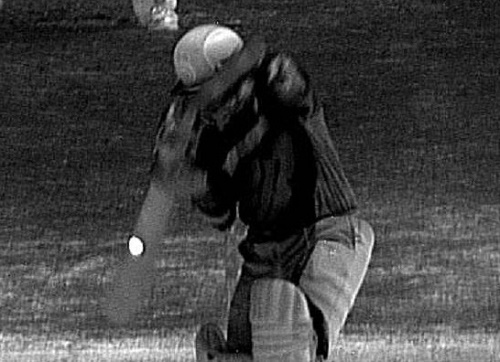
Most people will be familiar with Google earth platform or even google maps satellite view but Satellites provide much more than just images. With the help of digital image processing we can derive important information to assess the health of our planet and its resources. Satellites sensors are able to sense electromagnetic energy beyond the visible spectrum thus allowing us to sense what our eyes can't see. (ever wondered how in cricket the third umpire is able to tell if the ball hit the bat or no? infrared remote sensing is one of the answer) .
Infrared Remote Sensing to assist the 3rd umpire in Cricket.

 The uses go as far as once imagination can take. If one is interested to know some of the use cases, you may consult this document  THE EVER GROWING USE OF COPERNICUS ACROSS EUROPE’S REGIONS .

Birds Eye View of Salcete Taluka, Goa, India, Captured by Sentinel II satellite on 15/03/2020. 
There are several satellite missions launched by many nations of the world and some of the data is made freely available to the public. One of the freely available best resolution (10 meter) civilian satellite systems are the sentinels developed by the European space agency.   This along with various open source software such as QGIS make space intelligence accessible to the common man.  Sentinels provide imagery every 5 days which makes it an invaluable asset for monitoring and managing our plant through various applications. .

This is a false color composite wherein all the vegetation appears red because here instead of red wavelength, infrared(which is reflected by plants) is assigned red color.
In the months to come I will be publishing some more articles on remote sensing uses for Goa, India or even updating this one further. Stay tuned. If you have any specific questions feel free to post them in the comments.

Thank you.


Tuesday, 11 February 2020

Academia-Community Linkages: A Must!

Hello Readers!

In a recent development our Department of Geology was able to help an NGO, in preparing the Draft Coastal Zone Management Plans for several villages across Goa using latest open source GIS tools such as Mobile GPS, Google Earth, and Quantum GIS but this post isn't about GIS OR Geology. It is about what was learnt and realized during the course of this activity. It is about the benefits of such Academia-Community Linkages which were highlighted during the preparations of these plans.

Let me begin by giving you a background of the story. The Government of Goa presented the draft Coastal Zone Management Plans (CZMP) to the people of Goa. A document which was to become law if let through. This key document was prepared by a reputed national agency based in Chennai, which for some reason missed out several important coastal features such as Shell Fish Breeding Grounds, Important Fishing Zones, Canoe ramps, Ferry ramps, Fishermen Huts and other community structures such as Bunds, Sluice Gates, Ponds etc which are important assets of the coastal communities whose livelihood this very plan intend to protect as per its objective. These observations were highlighted by the many prominent NGO's and the coastal communities and hence the plans met with rejecting all over the coastal state. The coastal communities demanded that the agency send their surveyors on the ground to verify these facts however instead of doing the ground survey the government asked the people to send their objections or suggestions hence the people decided to prepare their own plans. This author first met with the representatives of the NGO during one of their awareness campaigns on CRZ in his own village. A brief discussion later a plan was made to have a seminar on the topic of CRZ in the college with the members of the NGO, Marine Researchers, Faculty and Students as participants. This seminar led to the idea of preparing the peoples draft CZMP with the technical expertise of the faculty and the support of the students. As the clocks were ticking on the short deadline for submission of these suggestions, several teams of students were mobilized to carry out field data collection in different villages across Goa. Armed with a pen, notebooks and mobile GPS, The Students, Representatives of NGO and representatives of various coastal communities including elected representatives of the villages set about collecting the necessary geospatial data. In a very short span of about 25 days 19 Villages were able to draft their CZMP and submit the Maps to the state Coastal Zone Management Authority for incorporation of their inputs. The National Agency will now have to verify these suggestions and hopefully incorporate the same in the final plan.

Coming back to the topic of this post, this whole exercise has given us some key pointer on, why there is a need to build Community-Academia Linkages?.

Personal Development of the Students: When students participate in activities of community interest they get an opportunity to interact in the real world, they learn to work in a team towards achieving a common goal, they experience working under pressure, learn to respect one another with different views and opinions, creating a positive impact in the community and being appreciated for their work gives them a feeling of belonging and happiness.   

For the faculty: As educators of a young nation we have a social responsibility towards nation building, serving the community for their betterment gives us immense satisfaction.

Often talent misses opportunity, many a times researchers from different fields spend much of their time on seeking problems rather than solutions to carry out research. Interacting with the community can help us understand the real problems and focus our efforts accordingly as per their needs and to come up with new ideas and solutions to those problems.

What good are the lessons taught in the classroom if we fail to apply them in the real world. Participating in community outreach activities puts our skills to test. faculty should be able to identify relevant skills and upgrade themselves with new knowledge from time to time.

For the institution: Community outreach should be an important part of any educational institution, this will give them recognition as a key player in the upliftment of the community. The positive impact will attract more students to the institute. It also has the potential to raise funding for the institution through a network of well wishers from the impacted community.

For the community:  Many a times the ability of community to understand, decide and act are hampered due to lack of access to reliable and trustworthy technical expertise. With a strong community-academia bonding it may be possible to overcome the may obstacles of good governance. Communities can be empowered by making them understand the various aspects of their environment thus enable them to make better choices. To make accessible to them the resources available in the institution such as Library, Scientific equipment, Expertise of the faculty and student volunteers.

Above I have just brushed upon the benefits of academia-community linkages, there is a wealth of opportunities and possibilities to unearth. share in your comments or experiences from your own community outreach endeavors in the comments below.


Tuesday, 7 January 2020

My Favorite Online Learning Platforms

Hello Readers!
Welcome to a new decade! 2020.

In our quest to continuously improve ourselves we need to  keep our skills up to date and relevant with changing times and requirements.  Over the past few weeks I have been looking up online for some interesting skills to learn on some of my favorite platforms. There is abundance of knowledge and easy to follow instructions for anybody who is determined to master a particular skill. 

Online learning is a great way to master skills without compromising on your current lifestyle or work. one can choose any place or time to learn, with the basic requirement being a computer and internet (and off course determination to cross to finish line). Some of the in demand skills are offered free of cost or budget friendly. Online platforms also offer the advantage of showing your achievement to your perspective employers on LinkedIn not just that most courses give you direct access to their forums where one can collaborate, evaluate, learn and interact with other like minded users and instructors of the course.  

Here is a short lift of my favorite platforms

1. Khanacademy  ( undoubtedly my no 1 recommendation):
all the courses are free of cost and well structured from basic to advance levels. The way each course is presented is unique and fun to learn. Tutorials are followed by practical exercises. the platform also allows one to tract their progress. User interface is excellent for anybody to get started without any instruction. Have a wide range of topics covering Maths, Sciences, Engineering, Computing, Finance, Test preparations for some of the hard to crack exams including IIT JEE (becuase I am from India) and many more. So if you haven't checked Khanacademy yet, Now is a good time to START ...


2) Udemy:
Udemy is a great place to learn some of the most basic to highly advance industry specific in demand skills. Unlike Khanacademy here the courses offered are industry specific and floated by individuals themselves who have a sound understanding of the subject, instructors vary from formal university/college professors, Phd holders to casual experts who have mastered the skills by doing/working in the field. Each course has ratings, overview videos, course content listed which really help you in choosing the particular course. All course come with a Udemy 30 days money back guarantee. Go on and master your new skills on udemy.


3) Coursera:
Coursera is a great place to find courses from some of the most leading Universities/Institutions and companies. Courses are formal and well structured. One can take up any course and learn for free or pay for a certification. One of the leading online platform for a more formal learning.   


4) Alison:
 Alison is one platform offering 1000 courses which are mostly skill based. The courses are taught by leading experts in the field. This is particularly a great place to enhance your computer skills.

The National Programme on Technology Enhanced Learning is one of the worlds leading platform offering courses in various engineering disciplines and other sciences. All the courses are taught by faculty from premier Indian institutions such as the IIT's. Each course is well structured with video tutorials followed by assignments/assessments. The certification is recognized by leading employers in India and worldwide, for a certification one has to fulfill the assessment criteria which includes completing all the assessments on time and attending an in person online exam at one of their designated exam centers spread all over the country. 


6) Swayam: 
Swayam is a programme initiated by the government of India. The platform hoists courses taught by best teachers from across the country. All the courses are free for anyone to access and learn.   

Tuesday, 21 November 2017

Collaborative Learning: Flipped classroom and ICT tools for Teachers

Hello Readers,

I recently attended a workshop titled ''Flipped Classroom'', which was organised by the IQAC of Parvatibai Chowgule College or Arts and Science, Autonomous, Margao Goa and was conducted by Prof. Dr Vasudha Kamat, former vice chancellor, SNDT Women's University Mumbai and Ms. Manali Joshi, Instructional Designer, Department of Educational Technology, SNDT Women's University Mumbai. In this blog post I am going share my views on collaborative classroom teaching and try to highlight some ''Information and Communication Technology (ICT)'' tools which can be integrated in your teaching to achieve better learning outcomes from your students. lets start... 

In the 21st century, higher education teachers face many a challenges in the classroom some of which are, Large number of students (>20), Short attention spans of students driven by mobile phone addiction, Mute spectator students leading to less engaging or boring lectures, diverse background of the students etc.. therefore there is an urgent need to teach the way students will learn. Traditional methods of classroom teaching, which is a teacher-centred approach alone cannot yield the desired learning outcomes from the students. The dynamics of the classroom needs to be changed from a Teacher-Centred to a Learner-Centred approach. Let me explain. In a traditional classroom a teacher would dedicate tremendous amount of class-time in giving knowledge to the students ( e.g. dictating class note) and considerably less time in analysis of the information which is actually the difficult task to grasp from a students perspective. In the present day, information can be made available at a click of a button therefore a modern day teacher should be able to achieve better outcomes by integrating the right ''Information and Communication Technology'' tools in their classrooms to supplement knowledge sharing and committing more time to analysis and evaluation of the information through a collaborative learning approach. 

Collaborative Learning? what is it?
Collaborative Learning is a teaching approach where the teacher facilitates learning by making the students engage in activities (in class or out of class) e.g. Group discussions, Debates, Group projects, Online Video, online discussion forums, online chats etc. In this kind of approach the students interact, evaluate, assess and guide one another to learn from each other as a group and create new knowledge. Here is a list of four core principle of collaborative learning  Collaborative classroom may be aided by the help of various ICT tools, this brings us to the flipped classroom strategy.

So lets hear what the pioneer Jon Bergmann has to say about flipped learning..
  

       Here is another video which simplifies flipped learning...


hoping that by now you have got a fair idea of what a Flipped classroom is, lets move on to some in Class activities which you could employ for a collaborative classroom approach.


a) Round Robin: Effective strategy for generating and sharing of ideas. 


b) Three step Interview: Effective in developing 3 basic skills in students which are Skill of Questioning, Listening and Time management.

 c) Jigsaw Puzzle : An excellent strategy for team building.


d) Team-Pair-Solo: This method can be effectively used for problem solving.

e) Four Corners: Beware!This method can make your class very dynamic. Effective in developing critical Thinking, Decision Making, Verbal Communication, Listening to and Respecting others opinion and more. 


There are plenty of interesting collaborative learning methods, these are just a few among those, I am sure these fantastic five have got you thinking by now, so go ahead and explore more on the internet for all things ;). 

Its time to move on to our next topic i.e. ICT tools for teachers. These tools might seem to be overwhelming for some at first sight but believe me they are not.  With plenty of help tips and startup guidance available, one should be able to master these tools with ease. If not than the benefits they bring to your classroom will easily override the effort which you will put in understanding them.''Stick to your Guns'' because here comes the lists..

1) Open Educational Resources (General): There are a plenty of websites and web portals catering to the needs of students and teachers for free the lists is extensive with some catering to very specific subjects. I am making no attempt to highlight the best or the widely used. These are just a few that I have found useful.    
  • Khanacademy.org : This one has been my life saver in the past for learning derivatives and other complicated mathematics. It caters to diverse subjects and keeps a practical approach in all of its tutorials. 
  • Slideshare: Here one can find topic related content in the form of presentations and videos form people all over the world.
  • Youtube: Don't you know it already? :P
2) Edpuzzle: Make any video your lesson! that says it all. This is a very effective tool for making videos interactive so you can be sure that your students are engaging with your online video content. It also allows you to track all your students progress and activity and much more.. don't believe me? check out this video 

3)  Padlet: This is an amazing tool to create and Collaborate. To understand what I mean click here. Padlet allows us to create a Bulletin board, Blog, Portfolio, Block diagrams and much more..  Here is a quick introductory video.

4) Polleverywhere: This tool lets you engage your audience or class in real time. One can easily start a conversation with everyone. simply put you ask the audience a question, then watch as the charts update automatically with their responses. Everything happens at the finger tips but a possible drawback for a classroom environment is that it requires the use of mobile phones or access to internet in class.    

Well they say all good things must come to an end but not here. I believe learning never ends so be assured I will be updating this blog post as I master some more tools.

Thank you for reading and hoping to enrich my knowledge with your experiences, so feel free to comment below and let me know what worked for you.


P.S. I wish to extend my sincere gratitude to our instructors Prof. Dr Vasudha Kamat and Ms. Manali Joshi for empowering us to take on the challenges of teaching in this 21st century using these effective ICT tools and SNDT Women's University Mumbai for creating such lovely content in the form of guides and Videos.


Sunday, 20 August 2017

Engaging with our local Geology Community

Once you have achieved your degree in your respective field of education, how do you start? One way is to get associated with your field based local community. Having a strong subject based community can provide immense benefits to their members, be it freshers or experts having years of experience. Having a good bonding with like minded people in your field of interest can provide mutual benefits of all sizes and for all the stakeholders (Faculty, Job seekers, Employers, General public). This blog post is about how we got together our local Geological Community by organising a maiden trekking event.


I was first introduced to Geological Society of Goa (GSG) when I attended a farewell function for one of my Goa University professors, which the GSG had organised. It was for the first time that I found myself in the company of many of my seniors, some of whom had graduated decades before I joined the university and had become masters of their trade. It was one of the largest gathering of the pupil of  Earth Science. I was eager to know more about this group, later I found out that the group had seen immense activity initially after its formation and off late it has been witnessing a struggle of a sort to maintain membership and expand its horizons. I had been keen to be associated with this vital organisation and that is when an opportunity struck. As I have been in the educational field for the last couple of years I got a chance to interact with one of the active members of the GSG. It was just a simple conversation between two intellectual beings, ideas and thoughts were shared and I was able to convey my interests. I learnt from him that GSG has been planning a revival.


The Goa University Geologists have an active Whatsapp group, though often it is heavily bombarded with content that is unrelated to geology and mostly annoying to its members but sometimes we get to witness a post or two which are geology related in addition to birthdays and condolence messages. It all began when a member posted an irrelevant video, a short argument followed and that is when a member rightly pointed out that we need to discuss something relevant


Here is a Script from the actual conversation


Member 1: Sir, we were supposed to arrange overnight camp. This is most relevant and we are sleeping on it🤣🤣 in that no one is interested.

Member 2: Plz take the lead Sir. we are ever ready
Member 1: we look forward to you sir for such things. I am there to support n participation
Member 2: Ok let us have an open discussion here about it

Member 1: Sir, we can think of a trekking event also. Thanks


And soon the conversation spiralled into a full blown discussion as other members quickly started givings inputs about locations and stuff. While all of this was happening another Whatsapp group was made,  comprising of a few identified members who would form the core organising team for this particular event (I was one among the privileged). Though physically distant we could converse instantly. Dates and venue suggestions had been pouring in on the main group and soon the day was decided as 13th August 2017 and we were to trek from the ancient 13th century Mahadev Temple at Tambdi Surla up to the Tambdi Surla Waterfall, a 90 min trek which is not to be missed if you are in Goa during the monsoons.


As with organising events of this nature, each presents a unique set of challenges. One of the hurdles was to note down registrations of the participating members. As the core committee comprised of all working professionals this would have been a task however we could get this task done seamlessly and effortlessly by adopting Goggle forms for registrations. Its simple and effective, one just have to create the form and share link via email/whatsapp etc. all the responses are then presented in an excel sheet.  We had set the benchmark as minimum 10 people for holding the event. We were surprised and at the same time motivated as the registrations crossed 60 marks withing a week. Thanks to the digital age. We soon had to wait-list interested candidates, due to the overwhelming responses. Wait listing candidates instead of closing the registration altogether played great dividends as a large number of participant dropped out as the day approached for various reasons. A day before the event we had 33 confirmed participants (a number more than 3 times our set benchmark of 10 but almost half the total no of participant registered for the event) which definitely gave us mixed feelings and a few anxious moments.


The day finally arrived with a blissful sunrise, no rain and slight mist, weather was perfect . Two buses were arranged, each to ferry trekkers from Panjim and Margao. So as to conserve travelling time. However just when we were expecting the participants to arrive at the designated boarding points, delayed participant messages started pouring in. Blame it on the poor public transport in Goa or/and the early morning reporting time of 6.50 am and 7 am. Nevertheless all of the expected participant made it. On arrival everybody greeted each other and engaged in an instant conversation. Once in the bus, two serious rules were made 1) only rocking music, no sad songs 2) No Geology talk. Signalling that everyone came to enjoy and have a good time. We met our counterparts from Panjim en-route at Ponda. The Margao pupil then shifted to the larger capacity bus from Panjim and then on we proceeded together as one team. On arrival at Tambdi Surla we had a quick introduction session of all the members. In the meantime we energised ourselves with fresh snacks including Veg pattis, Wada pav and Jumbo bananas.


Having energised ourselves we started our trail to the waterfall at around 9.30 am. Our trail was filled with adventure and intermittently by showers of blessings in the form of light rain. The trail took us through the dense jungle of the western ghats, where even the sunlight found it difficult to touch the ground (did i forget to mention mobile network as well?). Most of the path was covered by foliage save some stretches where the many streams transected our path.


 The trail was full of life and the water continuously made noise all along the trail as if trying to lift our spirits. At places some members did have falls due to loose and slippery pebbles, where one needs to be careful but nothing serious happened. The most encouraging thing to see was that each member who fell,  got up, dusted themselves and moved on as if there was no turning back. 


If the trail itself didn't give you enough thrill then the waterfall surely will. This beauty was flowing with such ferocity that it felt like bullets were passing through your body while sitting under the fall.  This giant cascades down from more 50 meters height in a milky appearance. The sight is mesmerising and awe inspiring. The water was so cold that it made us scream like small children on a merry-go-round as we entered the pool. We got to enjoy for over a couple of hours at the waterfall, everybody had a good time. We began our return journey from the waterfall at 1 pm.


On returning to our starting point, participants visited the Mahadev temple to offer prayers and to admire the beauty and intricate architecture of the temple walls. By now our stomachs were already craving for food which was arranged at the internationally acclaimed Nature's Nest resort which incidentally belongs to one of our fellow member geologist. At Nature's Nest we were treated to mouth watering authentic cuisine served in traditionally made pottery and cutlery.  


The resort besides having more than 10 cottages also boasts of a natural swimming pool and what can be described as a geological wonder i.e a bubbling pond (needs investigation to shed more light in this regard-see video below). The time spent at the resort was worth every penny and definitely impressed us with their hospitality and charm.

The trek provided an amazing platform for the first time, to our geology community, to meet and interact. It was a great success with the participation of over 30 members comprising of geology graduates spanning from 3 decades(1992 to 2016). Some young but all young in spirit. Friendships bonds were established and memories were made to cherish for life. We all departed home in peace hoping to meet again for another event.

Viva GSG!!!   

P.S: Thank you for taking your time to read this post. Do share your thoughts in the comments section below.   


Search This Blog

Google Earth Engine: A powerful application for the Earth Scientists

Hello Readers! Have you ever faced the difficulty of downloading a vast amount of satellite data due to slow internet? ever troubled by the ...